
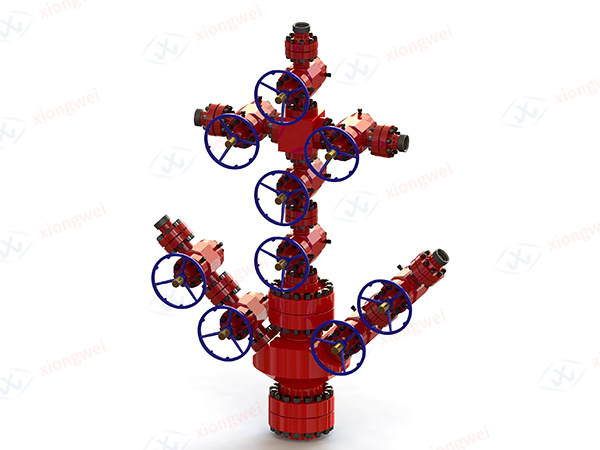
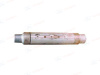
Oil, Water And Gas Three-Way Separation Gas Anchor
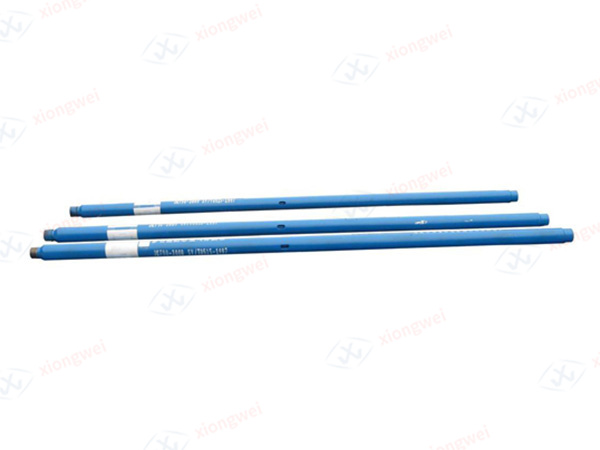
In the process of lifting the underground liquid to the ground, sand and gas have a great impact on the entire oil production equipment. Too much sand is easy to jam the pump, and too much gas is easy to cause gas lock. The structure is quite different from the conventional air anchor sand anchor. It mainly consists of two parts: cyclone solid-liquid separator and cyclone gas-liquid separator. It has a unique liquid inlet channel and an independent sand settling channel.
Working principle:
The oil-liquid-gas-sand mixture enters from the lower liquid inlet and descends along the spiral surface. Under the action of centrifugal force, the sand particles with higher density descend along the outer side of the spiral and enter the sand settling tail pipe; the gas and liquid descend along the inner side, enter the inner pipe from the lower liquid inlet pipe, and then enter the spiral gas-liquid separator. In the spiral gas-liquid separator, the liquid ascends along the outer spiral, is discharged through the liquid discharge screen pipe, and enters the oil pump screen pipe. The gas ascends along the inner side into the gas collecting hood and is discharged by the air release valve.
The vent valve ball is made of high-strength non-metallic material, with small throttling pressure difference, which can ensure smooth gas discharge. The outer tube of the multifunctional sand-proof oil-gas separator is an integral seamless tube. The annular space between it and the outer tube of the gas-sand separation blade is a sand settling channel. The sand particles filtered by the cyclone gas-liquid separation blade also sink into the sand settling tail pipe through this channel, avoiding the sand from being sucked in again when entering the separator. Technical parameters: Outer diameter: φ102mm Length: 38000m Cyclone gas-liquid separation blade lead: 80mm Cyclone gas-liquid separation blade length: 1200mm . Cyclone solid-liquid separation blade lead: 80mm Cyclone solid-liquid separation blade length: 1285mm Tail pipe length: 100m~150m
◆ Company Profile
Our company is an enterprise integrating the design and manufacture of petroleum machinery and equipment and petrochemical pipeline valves. It is now a national high-tech enterprise, a Jiangsu Province science and technology private enterprise, and a network supplier of Sinopec, PetroChina and CNOOC.
The company mainly produces oil drilling and production equipment and accessories: oil (gas) wellhead devices, blowout preventers, mud manifolds, throttling and well killing manifolds, downhole tools, salvage tools, screw drills, expansion joints, oil and water well acidification and plugging, layered fracturing, water injection, valves, filters, thermal recovery wellhead devices, thermal expansion compensators, thermal recovery gas injection active pipelines and process pipe string design and technical services for oil production. The company's products have more than 300 varieties and more than 1,000 specifications.
The market share of the company's products has been rising year by year, and it has now become a large-scale production enterprise integrating petrochemical equipment research and production in China. The company has always adhered to the core of user needs and manufacturing high-quality products, and has won the trust and praise of many users with excellent and attentive services. Relying on scientific research for development and continuously providing users with satisfactory high-quality products is our constant pursuit.
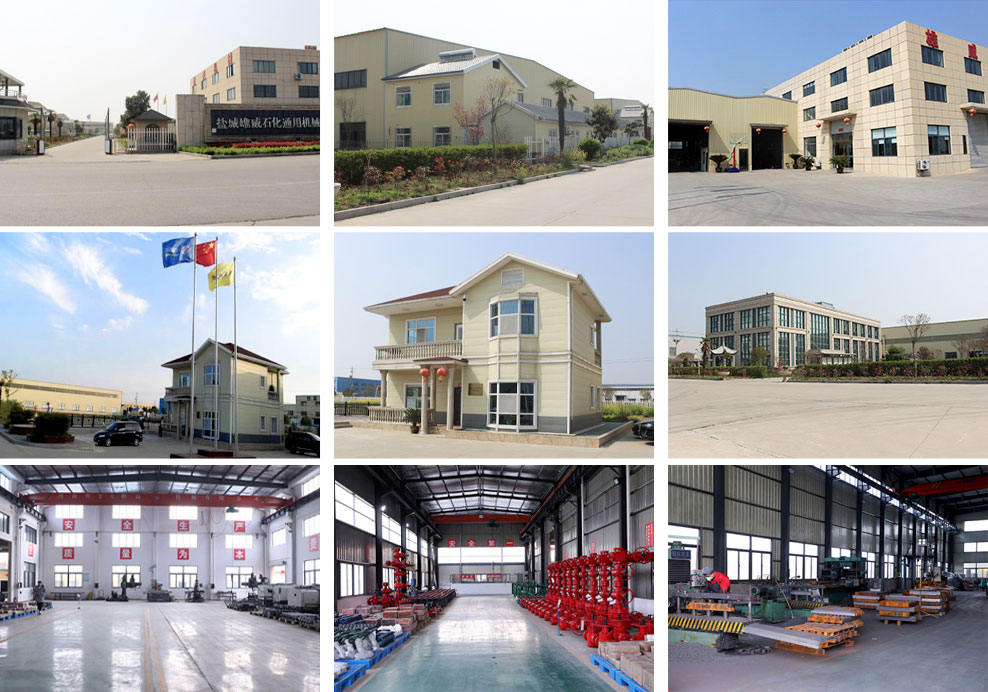
◆ Factory Equipment
◆ FAQ
Q.The influence of material selection of Christmas trees on production.
A.The material selection of Christmas trees is crucial to the production effect. Common materials include carbon steel, stainless steel and alloy materials. Carbon steel has a lower cost but is easily damaged in corrosive environments; stainless steel has strong corrosion resistance and is suitable for high temperature and high pressure environments, which helps to extend the service life; alloy materials provide better strength and wear resistance and are suitable for extreme conditions. Choosing the right material can improve the reliability of equipment, reduce failures and downtime, and thus improve oil production efficiency. At the same time, the choice of material will also affect the maintenance cost and the overall return on investment, so it is necessary to comprehensively consider geological conditions, fluid properties and economic factors.
Q.How to avoid damage to the wellhead device.
A.In order to avoid damage to the oil wellhead device, the following measures can be taken: First, regularly perform equipment maintenance and inspection to ensure that all components are operating normally and replace worn parts in a timely manner. Second, install a real-time monitoring system to monitor pressure and temperature changes so that operating parameters can be adjusted in a timely manner. Third, use corrosion-resistant materials to prevent environmental corrosion from affecting the equipment. Fourth, reasonably control the oil production rate to avoid equipment fatigue caused by excessive oil extraction. Finally, strengthen the training of operators, improve their professional skills, and reduce human errors. Through these measures, the service life of the wellhead device can be effectively extended to ensure safe and efficient mining.
Q.What should be paid attention to in the installation steps of the oil wellhead device?
A.The installation steps of the oil wellhead device include the following key links:
1. Site preparation: Ensure that the installation area is clean, check the stability of the ground, and perform necessary drainage and leveling.
2. Equipment inspection: Before installation, check the integrity and specifications of all components to ensure that there is no damage.
3. Foundation construction: According to the design requirements, build a suitable foundation to ensure that it can bear the weight of the equipment.
4. Step-by-step installation: According to the manufacturer's instructions, install each component step by step, such as the wellhead blowout preventer, valve, etc., to ensure that the connection is firm.
5. Sealing test: After the installation is completed, perform sealing and pressure tests to ensure that there is no leakage.
6. Debugging and inspection: After the installation is completed, debug and check whether all functions are normal.
During the installation process, attention should be paid to operational safety and ensure compliance with relevant specifications and standards.
People-oriented, honesty is gold, and customers are paramount are the founding tenets of our company. We warmly welcome and expect to receive strong support from more users. We firmly believe that technology creates brands and integrity creates brilliance. We will continue to repay the society with better products and services.
Related Products


CONTACT US
Contact US
Product Information
Quantity
Unit
Piece
Support order samples, customization, wholesale direct, and complete payment. If the product you look for does not have corresponding customized content, pls fill out the form below to contact us, and we will reply ASAP.